Friday, 15 June 2012

Germany turns up pressure on ‘radical’ Salafis in mass police raids

Alarabiya.net English

The homes of members belonging to three ultra-conservative Muslim organizations were targeted in police raids across Germany. (Reuters)
German police raided dozens of buildings across the country early on Thursday in a crackdown to “turn up the pressure” on “radical” Salafi Islamists suspected of plotting against the state, officials said.

The homes of members belonging to three ultra-conservative Muslim organizations were targeted in the raids, which around 1,000 officers carried out, a ministry spokesman said.

Regional state interior minister of North Rhine-Westphalia, Ralf Jaeger, described the police operation as a “decisive step by the security services in the fight against dangerous extremists.”
“Today’s operation shows that we’re turning up the pressure on the Salafis,” Jaeger said.

The move also accompanied an announcement from Interior Minister Hans-Peter Friedrich, saying the country has banned one particular network known as “Millatu Ibrahim.”

“(The Millatu Ibrahim group) works against our constitutional order,” he told reporters.

At the beginning of May, German authorities opened a probe against 44 members of the Islamic Salafi community and 37 others after violent clashes with police in the western town of Solingen.

The Salafis have raised concern with their drive to convert non-Muslims, a campaign that has involved handing out 25 million copies of the Quran in Germany, Austria and Switzerland.

Authorities estimate there are about 2,500 Salafis in Germany. They espouse an austere form of Sunni Islam, but officials in Germany accuse them of also condoning violence against state institutions.

Egyptians decry ‘soft coup’ after dissolution of Islamist-led parliament

Alarabiya.net English

Several hundreds of Egyptians marched to the iconic al-Tahrir Square on Thursday night in preparation for mass rallies against the court’s decision on Friday. (AFP)
Egyptian activists and political figures accused the ruling military council of having carried out a “soft coup” following a court ruling that dissolved the parliament on Thursday and kept Hosni Mubarak’s last prime minister eligible for the presidential runoff election this weekend.

The decision by the Supreme Constitutional Court effectively erased the tenuous progress from Egypt’s troubled transition in the past year, leaving the country with no parliament and concentrating power even more firmly in the hands of the generals who took over from Mubarak.
The court ruling set the stage for the military and remnants of the old regime to stay in power.

Several hundreds of Egyptians marched to the iconic al-Tahrir Square on Thursday night in preparation for mass rallies against the court’s decision on Friday.

The politically charged rulings dealt a heavy blow to the fundamentalist Islamic Brotherhood, with the group’s senior leader and lawmaker Mohammed el-Beltagy calling the decisions a “full-fledged coup,” and the group vowed to rally the public against Ahmed Shafiq, the last prime minister to serve under Mubarak.

“This is the Egypt that Shafiq and the military council want and which I will not accept no matter how dear the price is,” he wrote on his Facebook page.

Equally blunt was another Brotherhood stalwart, lawmaker Subhi Saleh. “The court, I can say, has handed Egypt to the military council on a golden platter and free of charge too,” he said.

Shafiq’s rival in the Saturday-Sunday runoff, Mohammed Morsi of the Muslim Brotherhood, said he was unhappy about the rulings but accepted them.

“It is my duty as the future president of Egypt, God willing, to separate between the state’s authorities and accept the rulings,” the U.S.-trained engineer said in a television interview. Late Thursday, he told a news conference: “Millions will go to the ballot boxes on Saturday and Sunday to say ‘no’ to the tyrants.”

“The military council transformed a soft coup into complete military coup under a constitutional umbrella and comic elections,” said Saif Eddin Abdel Fattah, a political science professor with Cairo University, on his twitter account.

Abdel Fattah said that an earlier judicial decision authorizing the military its intelligence services to detain civilians until a constitution is formed enables the generals to tighten their grip on power and hold ‘execute their full coup.”

The protesters who gathered in Tahrir on Thursday night chanted slogans against Shafiq and demanded his elimination from the runoff beginning Saturday. Some also carried banners for the Muslim Brotherhood’s candidate, Mohammed Mursi.

“I’m disappointed beyond words,” activist Ibrahim al-Houdaiby told AFP.

“This is in many ways a soft military coup. Now we have the parliamentary power going back to the Supreme Council of the Armed Forces, they will have their presidential candidate, they have the arrest laws. So we are going back to square one.”

Abdul Muniem Abul Fotouh, a moderate Islamist who stood for president in the first round of the race, described the court’s ruling as a “complete coup.”

“Keeping the military candidate and overturning the elected parliament after granting the military police the right to arrest is a complete coup,” he wrote on his Facebook page.

“Whoever thinks that the millions of youth will let it pass is deluding himself.”
The court based its decision on what it said were illegal articles in the law governing parliamentary elections that reserved a third of seats for directly voted independents, or party members, and the rest for party lists.

Egypt’s military decided on a complex electoral system in which voters cast ballots for party lists which made up two thirds of parliament and also for individual candidates for the remaining seats in the lower house.

The individual candidates were meant to be “independents,” but members of political parties were subsequently allowed to run, giving the powerful Muslim Brotherhood’s Freedom and Justice Party (FJP) an advantage.

“Egypt just witnessed the smoothest military coup,” wrote activist Hossam Bahgat on Twitter. “We’d be outraged if we weren’t so exhausted.”

More deaths reported across Syria as Haffa looks deserted, burnt after clashes

Alarabiya.net English

The interior of a burnt out government office in Haffa town near Latakia city. Haffa seemed smouldering and nearly deserted. (Reuters)
The Syrian town of Haffa was smoldering and nearly deserted on Thursday after days of clashes between government forces and rebels, while activists reported more army assaults on pro-opposition areas across the country.

At least 60 people have been killed by Syrian forces across the country, Al Arabiya reported citing activists at the Local Coordination Committees. Car bombs exploded in Damascus and the northwest city of Idlib earlier Thursday, monitors reported.

Syrian troops bombarded Rastan “using helicopters and mortars, killing and wounding a large number of rebel fighters,” activists said, according to AFP.
The violence comes one day after at least 77 people were killed across Syria on Wednesday, including 49 civilians, 21 soldiers and seven rebels, the Syrian Observatory for Human Rights said.

United Nations monitors had been trying to enter the town of al-Haffa after several days of fighting but were forced to turn back on Tuesday when a crowd attacked them.

They finally gained access on Thursday to find state buildings burnt down, shops abandoned and a body lying in the street. Smoke rose from destroyed buildings and burnt-out cars littered the streets. There were signs of a heavy bombardment.

Only a handful of residents could be seen and one man said 26,000 people had fled, Reuters reported.

Rebels pulled out of the town this week saying that the thousands of remaining citizens risked being killed in cold blood, a warning echoed by the United States.

Violence has surged in recent weeks after rebels abandoned a ceasefire negotiated by international envoy Kofi Annan in his efforts to ease the conflict between President Bashar al-Assad and the movement fighting to end his family's four decade rule.

Security forces have used troops, tanks and helicopters to hit at rebel-controlled suburbs near the capital Damascus, parts of eastern Deir Ezzor province, and villages in the northern and western parts of Aleppo province, near the Turkish border.

In Duma, about 15 km (10 miles) from Damascus, activists said tanks had entered the city outskirts and government forces were battling rebel fighters, activists said. At least two people were killed and 15 wounded, they said.

“It is a war today,” said an activist who called himself Ziad, speaking on Skype over the thump of shelling and the rattle of machinegun fire. “There are 10 tanks on the outskirts, but the rebels have destroyed one of them.”

The British-based Syrian Observatory for Human Rights, which has a network of activists across the country, said rebellious villages in the Aleppo countryside have been pounded by security forces, with troops trying to surround and raid rebel-held areas.

The uprising against Assad’s autocratic rule began as a peaceful pro-democracy movement in March 2011 but in the face of a crackdown by his forces has turned into an armed insurgency.

“There has been a dangerous escalation of armed violence across Syria,” said Sausan Ghosheh, spokeswoman for the U.N. monitors observing the now-collapsed ceasefire.

“They (residents) want the violence to stop and so do we, but the U.N. Supervision Mission cannot impose a ceasefire. The path of non-violence is a choice for the welfare of all Syrians.”

The United Nations says more than 10,000 people have been killed by government forces, while Syria says at least 2,600 members of the military and security forces have been killed by what it calls foreign-backed “Islamist terrorists.”

World powers are divided over the next move.

Russia and China, both permanent members of the U.N. Security Council with veto power, have blocked efforts by Western powers to condemn Assad or call for his removal.

Diplomats said world powers were working towards holding a crisis meeting on Syria in Geneva on June 30 to try to get the Annan plan back on track.

Annan, who represents the United Nations and the Arab League mediator, has called for a Contact Group to be convened as soon as possible, but the United States is opposed to the involvement of Iran, Syria’s main ally in the region.

Two diplomats told Reuters they were hoping to have a meeting on the 30th, but a third said Iran’s participation was still a sticking point.

Annan’s spokesman Ahmad Fawzi said the envoy was having urgent meetings to reach consensus on the shape and formula for the meeting. If one was held, it would aim to “give teeth” to the Annan plan, not to create a new one, he said.

U.S. Secretary of State Hillary Clinton said on Tuesday that Washington had information Russia was in the process of supplying Syria with helicopters, which have been used in government assaults on towns and cities.

Syria’s ambassador to Moscow told Reuters on Thursday that Russia was “not delivering any helicopters to Syria.”

Allah’s Plan for You and Me

MuslimMatters.org

article-image 
Allah subḥānahu wa ta'āla (glorified and exalted be He) had a plan for you before you were born, and He still has a plan for you. Allah's plan for you is necessary and glorious. His plan is vital to your success and important to the world.
Allah's plan is not set in stone, as if we were robots pre-programmed in the factory. That would strip us of free will and deny our natures. Rather, I believe that Allah has a flexible plan for each human being:  a plan that allows that person to benefit the world with his/her unique talents.
This is in fact the Islamic view of al-Qadar, or predestination. There is no doubt that Allah has decreed everything that happens in the universe from the beginning of time to the end, and that Allah has written it all in al-Lawh al-Mahfooz (the Book of Decrees).
“Know you not that Allah knows all that is in the heaven and on the earth? Verily, it is (all) in the Book (Al‑Lawh Al‑Mahfooz). Verily, that is easy for Allah” (Quran, al-Hajj 22:70)
In Saheeh Muslim (2653) it is narrated that 'Abd-Allah ibn 'Amr ibn al-'Aas (may Allah be pleased with him) said: I heard the Messenger of Allah (peace and blessings of Allah be upon him) say: “Allah wrote down the decrees of creation fifty thousand years before He created the heavens and the earth.”
Everything happens by the will of Allah. Whatever He wills happens, and whatever he does not will does not happen. However, as Sheikh Muhammad Saalih Al-Munajjid explains,
Belief in al-qadar does not contradict the idea that a person has free will with regard to actions in which he has free choice. Sharee'ah and real life both indicate that people have this will.
Allaah says concerning man's will (interpretation of the meaning):
“That is (without doubt) the True Day. So, whosoever wills, let him seek a place with (or a way to) His Lord (by obeying Him in this worldly life)!” [al-Naba' 78:39]
(and other similar ayaat)
These verses confirm that man has a will and the ability to do what he wants and not to do what he does not want.
With regard to real life, everyone knows that he has a will and the ability to do what he wants and not to do what he does not want. And he can distinguish between the things that happen when he wants them to, such as walking, and those that happen without him wanting them to, such as shivering. But the will and ability of man are subject to the will and decree of Allaah.
Sheikh Al-Munajjid's last paragraph is the key to understanding Al-Qadar: walking (voluntary) versus shivering (involuntary). Other scholars have explained it as two types of Qadar, fixed and flexible. The fixed Qadar is that which happens to us from beyond our control. For example the time and place of our birth, any illnesses and natural disasters that befall us, etc. The flexible Qadar is that which is within the realm of our free will. Whether we do good or evil, and what we choose to believe and how we choose to live. Sheikh-ul-Islam Ibn Taymiyyah wrote:
There are two types of provision and lifespan: the first type has already been decreed and is written in Umm al-kitaab, and cannot be changed or altered. The next type of qadar, Allah has informed His angels of His decrees. This is the type where provisions and lifespan may increase or decrease. Hence Allah the Almighty says what may be translated as, “Allah blots out what he wills and confirms [what He wills]. And with Him is the Mother of the book.” (Surat Ar-Ra'ad, verse 39) The mother of the Book (Umm al-Kitaab) is Al-Lawh al-Mahfoodh, in which Allah has decreed all things as they will always be without change. However, the decrees contained in the books of the angels, such as lifespan and provisions, may increase or decrease according to various circumstances; thereafter, the angels will re-write a person's provision and lifespan. If a person upholds the ties of kinship, his provisions and lifespan will be extended, otherwise they will decrease.” [See Majmoo'al-Fataawa 8/540]
So Allah has a plan for you, but fulfillment of that plan is up to you:  the choices you make, as well as your degree of faith, persistence and determination.
Allah's plan for you is important to the world because Allah created nothing in vain. Look at His creation. Everything has a purpose, from the sun that heats our world, to the bacteria that consume waste.
You are the same. You have a purpose. You are necessary to the world. If your presence were not vital in some way, then you would not have been made.
Discovering Allah's Plan
Road up a mountain
Allah's plan for us is not always what we might wish it to be.
How do we discover Allah's plan for us? Where do we find it? How do we realize it in our lives?
It's not as difficult as we might think. It wouldn't make sense for Allah to have a plan for us and then leave us stumbling in the dark. Allah's plan doesn't have to be a mystery. If we trust Him, do what He asks, and follow our hearts, His plan will unfold in our lives like a brightly lit path.
If you are trying to follow Allah's guidance, but you find yourself confronted by obstacles and hardship, don't despair.  The hardship is probably a sign that you are on the right path. Consider our Prophets (may Allah bless them all) who faced tremendous obstacles:
The Prophet Ibrahim 'alayhi'l-salām (peace be upon him) was disowned by his family and thrown by his people into a blazing fire; Allah rescued him from that, and made him the father of two nations.
Allah inspired the mother of the baby Musa 'alayhi'l-salām (peace be upon him) and told her to place her infant into a chest and send it floating down the Nile. If the soldiers of Pharaoh ever learned about his birth:
“We revealed to Moses' mother, 'Suckle him and then when you fear for him cast him into the sea. Do not fear or grieve; We will return him to you and make him one of the Messengers.'” (Surat al-Qasas: 7)
That was a hard plan to follow, but she trusted her Lord, and carried out her mission.
The young Yusuf 'alayhi'l-salām (peace be upon him) was thrown by his brothers into a well; later he was sold into slavery, then imprisoned for years; but in the end he became an important minister, and was reunited with his father.
Maryam 'alayhi'l-salām (peace be upon him), the mother of Isa 'alayhi'l-salām (peace be upon him), delivered her child alone under a palm tree, far from her people as she feared their reaction; but Allah helped her through miracles, until she became the honored mother of a great Prophet.
The Prophet Yunus 'alayhi'l-salām (peace be upon him) gave up on his mission to the people of Nineveh, ventured onto a ship and was then cast into the sea, where he was swallowed by a fish. At the point of despair, he called upon Allah with all his heart and was rescued. He returned to his mission and achieved success.
Aishah raḍyAllāhu 'anha (may Allāh be pleased with her), the wife of the Prophet ṣallallāhu 'alayhi wa sallam (peace and blessings of Allāh be upon him), was slandered by an ugly lie, but Allah brought the truth to light, and Aishah became a leader and scholar in her own right.
The companion Umm Salamah raḍyAllāhu 'anha (may Allāh be pleased with her) lost her beloved husband Abu Salamah in the battle of Uhud; she thought that no husband could ever be better than him, and yet she ended up marrying the Prophet himself ṣallallāhu 'alayhi wa sallam (peace and blessings of Allāh be upon him). Things are not always what they seem.
Be patient. Allah has a plan for you.
Following Allah's Plan
This is the hard part. Allah's plan for us is true to who we are at our core, in our very essence. It will not correlate to an artificial persona we have adopted, or our desire to be seen and recognized. Allah's plan may not bring us fame, fortune, or physical pleasure. It might mean giving up material comfort. So Allah's plan for us may not be what we would wish it to be.
Abu Hurayrah raḍyAllāhu 'anhu (may Allāh be pleased with him), the companion of the Messenger of Allah ṣallallāhu 'alayhi wa sallam (peace and blessings of Allāh be upon him), was asked about Taqwa (God-consciousness). He said, “It is a road full of thorns. One who walks it needs to have extreme patience.”
In fact, Allah's plan may be so challenging that we may perceive it but decline to follow it. I have known all my life that I was a writer. I've been talking for years about writing certain books. And yet it took me until the age of 44 to begin writing about the things that really mattered to me, and I still have not published a book (look for it this year, insha'Allah!). Why did it take me so long to do what I was meant to do?
I have a friend who says that Africa has been calling her all her life. She believes that her destiny is to go there and help the African people in some way. But she has not done it. Why?
I have another friend who believes that da'wah is his mission in life. He spent ten years studying Japanese at the university level, and he dreams of living in Japan and doing da'wah there. But he has no concrete plan to do so. Why?
I asked several brothers and sisters if they know what their mission in life might be. Some said yes. I asked them if they were carrying out their mission. Most said no, and gave these reasons:
  • I feel that others are more qualified than me.
  • It seems like a fantasy.
  • It feels like a dream.
  • I tried once and it didn't go my way.
  • Right now I need to focus on financial security.
  • I'm not ready yet.
Brothers and sisters, no one more qualified than you to fulfill the plan that Allah has for you! Allah's plan is not a fantasy, nor a dream. It may not go your way the first time, or the second, or the third. It may not make you rich, but there is no true financial security in this life – that's an illusion.  No one expects you to let your family go hungry. Work hard and provide for them, but don't get caught in the trap of thinking that the accumulation of wealth will save you, because the only true security is with Allah. And last of all, no one is ever ready to walk fee-sabeel-illah (in the path of Allah). It is a road full of thorns. But it is also the road to fulfillment, happiness, barakah and success.
Fulfilling Allah's plan for us requires that we silence the voice of our own desire, open ourselves to Allah, and look within with total sincerity. It takes courage, patience and determination. It is the path to Jannah (Paradise), Insha'Allah.

Self-Hate, Racism ‘In Style’ February 20, 2012 by Umm Zakiyyah Family and Community, F

MuslimMatters.org

eatured, Integration and Interactions, Marriage, Society, Specialists
article-image “Pakistanis are the worst!” a young Desi woman exclaimed wrinkling her nose, “I would never advise marrying any of them.” The other Pakistani women present nodded in emphatic agreement while others shook their heads knowingly.
“Arabs are so extreme,” an Arab woman interjected, “Everything is harām to them.” “Americans are much better,” another woman agreed, “They're the only men worth marrying.”
At the last comment, unease knotted in my stomach…
Like most people, my friends and I enjoy the lighthearted discussions that allow us to look at our cultural flaws and critique them.  But recently, amidst this sort of talk, I find myself growing increasingly uncomfortable.  Perhaps I'm being oversensitive. I've certainly considered this possibility.  But careful introspection suggests that Allāh subḥānahu wa ta'āla (glorified and exalted be He) is simply answering my oft-repeated supplication…
O Allāh! Make me love what you love, and make me hate what you hate.
And no matter how much I tell myself that our talk is harmless, that there's nothing wrong with having a “good laugh” every now and then,  there remains in my heart a wavering that tells me this talk isn't amongst the speech beloved by Allāh subḥānahu wa ta'āla (glorified and exalted be He)
Once when the Prophet ṣallallāhu 'alayhi wa sallam (peace and blessings of Allāh be upon him) was asked about righteousness, he said, “Consult your heart. Righteousness is that about which the soul feels tranquil and the heart feels tranquil, and sin is what creates restlessness in the soul and moves to and fro in the breast, even though people give you their opinion (in your favor) and continue to do so,” (Ahmad and Al-Darimi).
I certainly don't think it's contrary to righteousness to critique ourselves from time to time.  Surely, there are even moments when we may find humor in our faults and ignorance.  The famous story of how 'Umar b. Al-Khaṭṭāb raḍyAllāhu 'anhu (may Allāh be pleased with him) laughed as he recalled eating his “date god” during his pre-Islamic days makes that point quite clearly.
However, there is a marked difference between having a healthy sense of humor or engaging in necessary self-analysis and being condescendingly judgmental — even if we imagine ourselves as part of the group we are judging.
Allāh subḥānahu wa ta'āla (glorified and exalted be He) says,

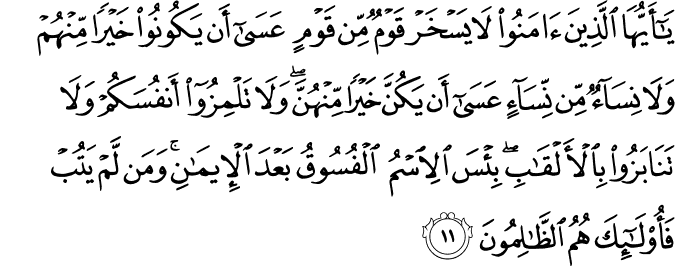
“O you who believe! Let not a group scoff at another group. It may be that the latter are better than the former. Nor let [some] women scoff at other women. It may be that the latter are better than the former. Nor defame one another, nor insult one another by nicknames. How ill-seeming is it to insult one's brother after having faith. And whosoever does not repent, then such are the wrongdoers.” (Al-ujurāt, 49:11)
We often think of this āyah as referring to scoffing at the other—a group wholly disconnected from ourselves. But even if this is the case, Allāh subḥānahu wa ta'āla (glorified and exalted be He) does not limit this “other group” to those who share no common traits with us.  As such, it is quite possible that those whom we are cautioned against mocking share our race, ethnicity, or background.
Moreover, most times when we are speaking with condescension about “our” culture or ethnic group, we are excluding ourselves from “our” group. Thus, even if we never take time to analyze the implications of our scoffing, our condescending speech suggests that we imagine ourselves as “remarkable exceptions” to a “deplorable rule.”
***
“I would never marry my daughter to a Black man,” an African-American woman shared honestly as we sat amongst a group of mostly Black Americans.
“And I would never let my sons marry a Black woman,” another African-American woman responded quite brusquely.
I grew quiet, and again I felt that knotting in my stomach. Then who amongst our children will marry at all? I wondered. I found it quite sad that these women had memorized Qur'an, studied Islam from scholars, and were actively engaged in da'wah, yet they somehow missed a quite basic point of human righteousness…
That “good” or “bad” is determined by the state of one's heart and commitment to righteous action—regardless of the color of their skin.
***
“My parents are so racist,” an Indian woman told me once after saying she would never marry a man from her country, “They would never let me marry outside my culture.”
“And why can't you marry a righteous Indian man?” I'd asked. “Allāh subḥānahu wa ta'āla (glorified and exalted be He) has placed righteous people amongst all cultures. Why can't your future husband be from yours?”
I then added, “Make du'ā'. Certainly Allāh subḥānahu wa ta'āla (glorified and exalted be He) is capable of making your spouse someone whom you and your parents approve of.”
***
“A righteous woman is a righteous woman,” my husband said once in response to some brothers expressing disdain for marrying women of a particular ethnic group,  “And an unrighteous woman is an unrighteous woman.  And if a woman isn't righteous,” he added, “it doesn't matter what race she is.”
Unfortunately, this is not the lens we use to view the world. Rather, it has become quite “in vogue” for us to cast judgments based primarily (if not solely) on race, culture, and ethnicity—especially if we happen to be part of these groups. What's most heartbreaking is that amongst many of us, this form of self-hate is associated with practicing “true Islam”—as if Allāh subḥānahu wa ta'āla (glorified and exalted be He) is asking us to leave racism and nationalism that harms others only so that we may inflict this same harm on those who look like us.
Allāh subḥānahu wa ta'āla (glorified and exalted be He) says,
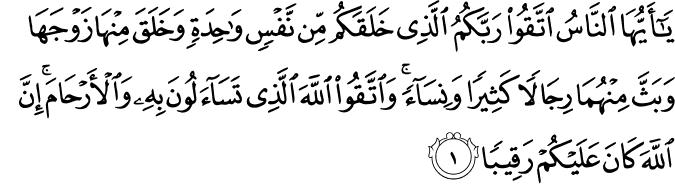
“…And [reverence] the wombs [that bore you]. For Allāh ever watches over you.”
(Al-Nisā', 4:1)
And what are these wombs if not our parents, homes, and cultures from whence we all come? And how do we imagine that we can attain righteousness by scorning those whom Allāh subḥānahu wa ta'āla (glorified and exalted be He) chose to nurture us from young? Is this not one of the greatest forms of ingratitude to our Creator?
Yes, we will certainly find amongst all people—especially amongst ourselves—much that needs to be improved, rectified, or even shunned. But if Allāh subḥānahu wa ta'āla (glorified and exalted be He) graces us with knowledge such that we see the faults of our people, this is not an opportunity to scorn or mock the wombs that bore us; rather, it is an opportunity to show patience and gratitude for the favors that Allāh subḥānahu wa ta'āla (glorified and exalted be He) has bestowed on us.
Is it not amongst Allāh's subḥānahu wa ta'āla (glorified and exalted be He) innumerable bounties that He provided us with parents, homes, and cultures at all?
Allāh subḥānahu wa ta'āla (glorified and exalted be He) says,
“Verily, Allāh is full of bounty to mankind, but most of them are ungrateful.”
(Yūnus, 10:60)
So let us not rush to express hatred and scorn for the bounties that Allāh subḥānahu wa ta'āla (glorified and exalted be He) has bestowed on us—even when these earthly bounties come with human fault and erred cultures. Instead, let us be thankful for these favors—through showing patience with the faults of others (even if these “others” are from our own race, ethnicity, or culture) and through showing gratitude for the good within ourselves.
Like racism toward the “other”, racism toward the self is what deserves our scorn—no matter how “in style” it is amongst some Muslims to harbor bigotry toward the wombs that bore them.
Surely, for the believer, reverencing the wombs that bore them—like living a life of patience and gratitude—is always “in style”.

Umm Zakiyyah is the internationally acclaimed author of the If I Should Speak trilogy, and the novels Realities of Submission and Hearts We Lost.  To learn more about the author, visit themuslimauthor.com or join her Facebook page.

Umm Zakiyyah | Are You a Sign of the Last Day?

MuslimMatters.org

article-image Cross-post from http://saudilife.net/life-and-society/92-life-and-society/1653-are-you-a-sign-of-the-last-day
It was while watching the Oprah Winfrey Show many years ago when I realized that times have really changed…
This particular show interviewed a mother who had written and published a children's book and dedicated it to her daughter.  The mother shared with Oprah that she now realized that she had spent many of the daughter's young years working hard in her career and hadn't given her daughter the time and attention she deserved.
The book was a gift from mother to daughter saying, I'm sorry and I love you. Moved by the sincerity of the mother, Oprah turned to the daughter, who was also present on the show, and asked her about the heartfelt dedication in the book.
In response, the daughter scoffed at the dedication and said it meant nothing to her.  She said that a meager book could never make up for all she'd lost in those years of her mother not being there for her…
…A friend of mine once shared the story of a young woman who had accepted Islam and fell sick shortly thereafter and was hospitalized.  Her new Muslim companions would gather at her bedside reciting Qu'ran and keeping her company.  One day one of the Muslims was reciting Qur'an and the woman started to turn her head back and forth in apparent agitation.  Concerned, the Muslims asked what was wrong.
The sick woman responded by saying that it was hard to concentrate because she didn't know whom to listen to.
“What do you mean?” the Muslims asked her.
Agitated, she said to the one reciting Qur'an, “Should I listen to you and should I listen to them?”
The reciter turned and didn't see anyone.  “I'm the only one reciting,” he said.
The woman, who did not know Arabic, responded saying, “I hear someone else saying, 'Yaa ayyu han-nafsul mut-ma-innah. 'Irji'ee ilaa rabbiki raaDiyya-tam marDiyyah.  Fad-khulee fee 'ebaadee, wad-khulee jannatee.”
O reassured soul, Return to your Lord, well-pleased and pleasing [to Him],
And enter among My [righteous]servants,
And enter My Paradise
(Al-Fajr, 89:27-30).
A moment later, she died…
…I don't know why, but the daughter's words to her mother that day as I watched Oprah affected me deeply.  I nearly cried.
I wished I could somehow reach out to the daughter and tell her that it was she who should be apologizing to her mother.  It was she who should be asking for forgiveness.  It was she who should be dedicating, not a book, but her life to the woman who carried her for nine long months and endured agonizing pain to see her safely into the world.
If your mother had done only that, I wanted to tell her, a life of toiling servitude at her feet could not repay even a single contraction your mother suffered birthing you.
I wanted, too, to ask this single question:  For whose comfort do you think your mother worked so long and hard in her career?
Allah says:
“And your Lord has decreed that you worship none but Him, and that you be dutiful to your parents. If one or both of them attain old age in your life, say not to them Uff [a word of disrespect], nor shout at them but address them in terms of honor. And lower unto them the wing of submission and humility through mercy, and say, 'My Lord!  Bestow on them Your Mercy as they did bring me up when I was young.'  Your Lord knows best what is in your inner-selves.  If you are righteous, then, verily, He is Most Forgiving to those who turn unto Him again and again in obedience, and in repentance.” (17:23-24).
Time and time again we read verses about Allah's mercy and forgiveness, but it is often not real for us.  It is only when we hear stories like the one about the young new Muslim that we begin to get a glimpse into that vast world of Allah's compassion for His servants.
When I heard the story of the girl hearing the last verses from Soorat Al-Fajr before death, my eyes welled with tears.  I longed to hear those Divine words recited to me.  But as I reflected on my life and my shortcomings, I wondered if I'd be given that gift.
What was it, I wondered, that she had done that pleased Allah so much that she earned this momentous blessing?  Was there something—anything—that I could do to earn something similar?
…I thought of my parents, and of the love that the mother must have had when dedicating a book to her daughter.
And I wondered at the regret the mother must have felt when realizing that her daughter would never understand just how much she loved her—even when she had no idea how to show it…
If I were to speak to the daughter of the career woman—or to the daughter or son of an absent father—I could never say you don't have a right to hurt, a right to cry, a right to wish things were different, or even that you don't have the right to feel that your father or mother fell short in their responsibilities to you.
For surely, it is true:  Parents are not angels.  Parents are not without sin.  And parents, of a certainty, are riddled with faults.
But rest assured, dear soul, I'd like to say, that Allah knows what you've endured.  Allah knows your pain.  Allah knows the hurt you nurse in your heart…
“…Your Lord knows best what is in your inner-selves…”
Even if you suffered at their hands something so severe that you had no choice but to speak up and seek help from others, what harm would it do, even still, to honor and respect them?
What harm will your being righteous do to you?
“…If you are righteous, then, verily, He is Most Forgiving to those who turn unto Him again and again in obedience, and in repentance…”
But she was never there for me.
He was always gone.
Why didn't he try harder?
They should listen more
But what of our falling short in our responsibilities to them?
We accept without question the duty of parents to provide, to be kind, to “be there”, and to love us, regardless….
….Of our temper tantrums, our sudden outbursts, our tumultuous teens….
Regardless of our tendency to rarely, if ever, reach out to them.
So in those inevitable moments of hurt, when reflecting on the wrongs of one's parents, why not pray for them?  Why not ask Allah to forgive them?
… “My Lord!  Bestow on them Your Mercy…”
A hadith reports the Prophet, sallallaahu'alayhi wa sallam, as saying, “Verily, on the Day of Resurrection, Allah has slaves to whom He will neither speak nor purify nor look at.” When he was asked who these people were, among them was the person who disowns or abandons his parents” (Ahmad). 
Yet, as we draw ever closer to the Day of Judgment, there are so few of us who are moved to utter a simple prayer asking Allah's mercy for our parents, and so many of us who move our tongues endlessly recounting their faults.
The Prophet, sallallaahu'alayhi wa sallam, taught that one of the signs of the Last Day is that a slave girl will give birth to her master.   And, indeed, it seems that that time is upon us…
A mother is given orders by her child.  A father is scolded for his faults.  A mother dedicates a book—a life—to a child and is told…
…A meager book could never make up for all I've lost in those years of you not being there…
What, dear child, would you feel, if that book were your Book of Deeds handed to you on the Day of Judgment?
Could your list of transgressions therein—against your parents and yourself—make up for all that you lost in not “being there” for your own soul?
And perhaps, you simply saying to your career mother or absent father, “I love you and will honor you still” would be the cause for every single ink stroke in your Book of sin to be erased – forever – from your account.
And perhaps, too, while your soul is being taken from your body, you will hear—because of this “meager” good deed—a voice from on high saying…
“O reassured soul, return to your Lord, well-pleased and pleasing [to Him], and enter among My [righteous] servants.  And enter My Paradise.”
And perhaps your mother and father will enter with you, too.

http://muslimmatters.org/2012/06/15/umm-zakiyah-are-you-a-sign-of-the-last-day/

Sunday, 10 June 2012

Iran publicly hangs five drug smugglers: report

Alarabiya.net English

Iran says the death penalty is essential to maintain law and order, and that it is applied only after exhaustive judicial proceedings. (File photo)
Iran has publicly hanged five men convicted of drug trafficking in the southern city of Shiraz, the governmental newspaper IRAN reported on Saturday.

The report said the men sent to the gallows on Thursday were convicted of smuggling different amounts of narcotics and identified them as Abbas Z., Aref A., Abolqasem A., Farhang N., Ali Akbar M.

Iran is one of the world’s main practitioners of capital punishment, along with China, Saudi Arabia and the United States.
London-based Amnesty International said in its annual review of death sentences and executions worldwide published in March that Iran executed at least 360 people in 2011, three-quarters of them for drugs offences, up from at least 252 in 2010.

Adultery, murder, rape, drug trafficking, apostasy and armed robbery are all punishable by death under the Iran’s Islamic sharia law since the country’s 1979 Islamic revolution.

Iran says the death penalty is essential to maintain law and order, and that it is applied only after exhaustive judicial proceedings.